Blog management services
We plan topics, brief writers and edit drafts for company blogs. We prepare and publish pages when agreed and revisit articles that need updating.

Global · English Россия · Русский
Review how shoppers find your catalogue, how search engines handle different URLs and which changes to test first.
We plan topics, brief writers and edit drafts for company blogs. We prepare and publish pages when agreed and revisit articles that need updating.
Find how people search for your products or services. We group those searches, map them to pages and prepare SEO content briefs for the pages we agree on.
Help customers find the branch that serves them. We plan location pages, prepare local information and review available search and contact data by region.
We review your website and agree which pages and settings to work on. Then we make the initial SEO changes, check them and share the results.
Find the right catalog pages for shoppers who search by manufacturer, range or model. We review the brands you choose and deliver a search map and a plan for improving their pages.
Improve the service pages that matter most and review the visits and contact activity your site can track.
Find what is preventing search engines from accessing or indexing your pages. Get a prioritized report with example URLs and tasks for your developers.
Match shopper searches to categories and products.
Check access, duplication and how the shop generates alternative addresses.
Review product information, metadata and shared templates.
Agree on where to expand content and how to check the first changes.
Check page types, existing templates and current search data.
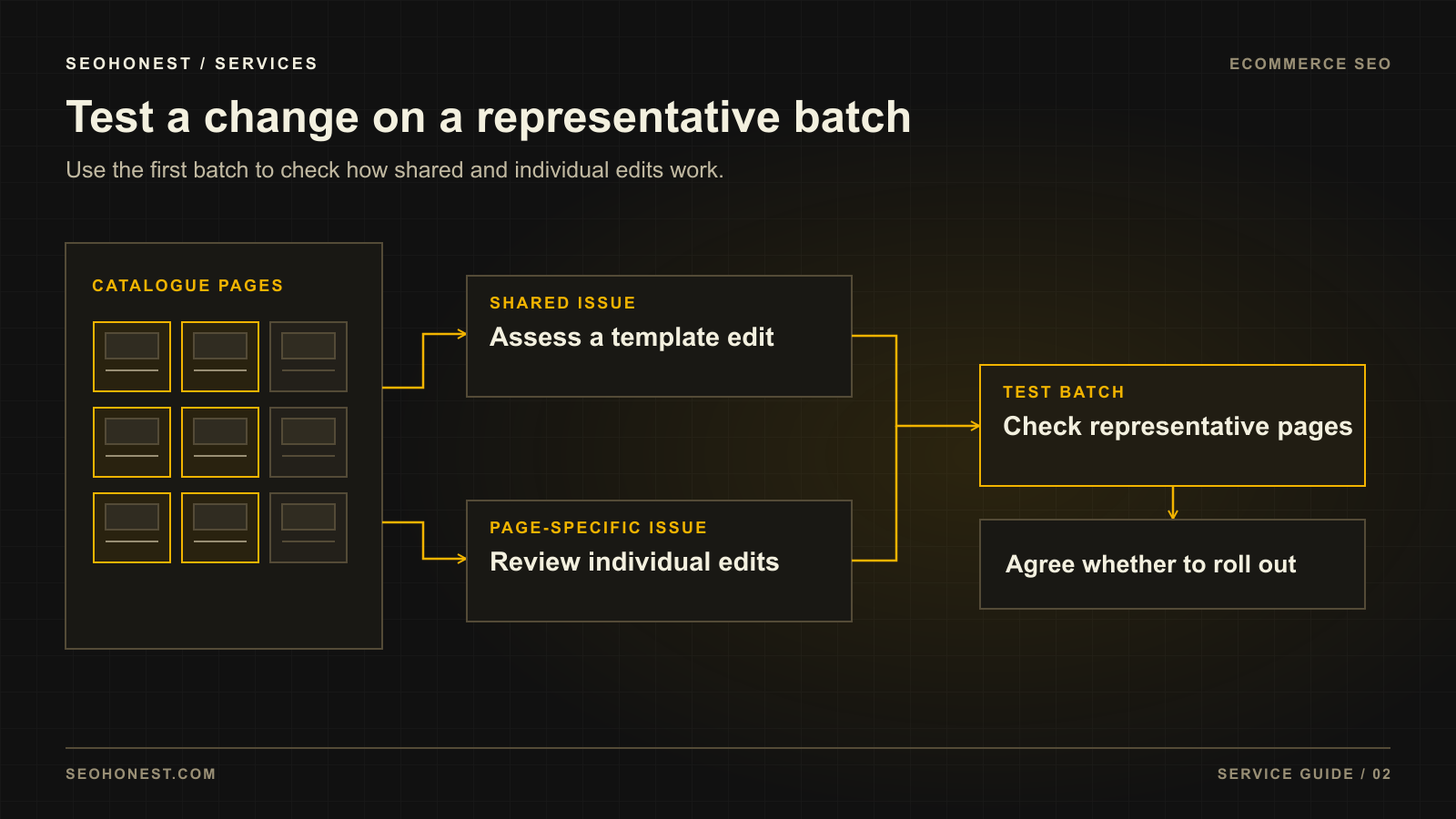
Choose representative pages and separate template changes from individual edits.
Test the first batch against the catalogue and page content.
Check what changed and agree whether to extend the work.
Seohonest provides ongoing ecommerce SEO services for existing online shops. We help you decide which parts of your catalogue to improve, check how search engines handle different page addresses, and agree which changes to test first.
We look at category and product pages together. The way shoppers search helps us decide which pages could answer those searches, while the way the shop generates URLs shapes what we can change. We agree the first set of work with you, check it on representative pages and review what to do next.
Request an ecommerce SEO quote
We start with what shoppers look for and what your shop actually sells. That helps us decide which existing pages to develop and whether a new page would serve a distinct need.
A category that matters to your business and already has a suitable range can be a sensible first batch. It gives us a defined group of pages to review before applying any approach more widely.
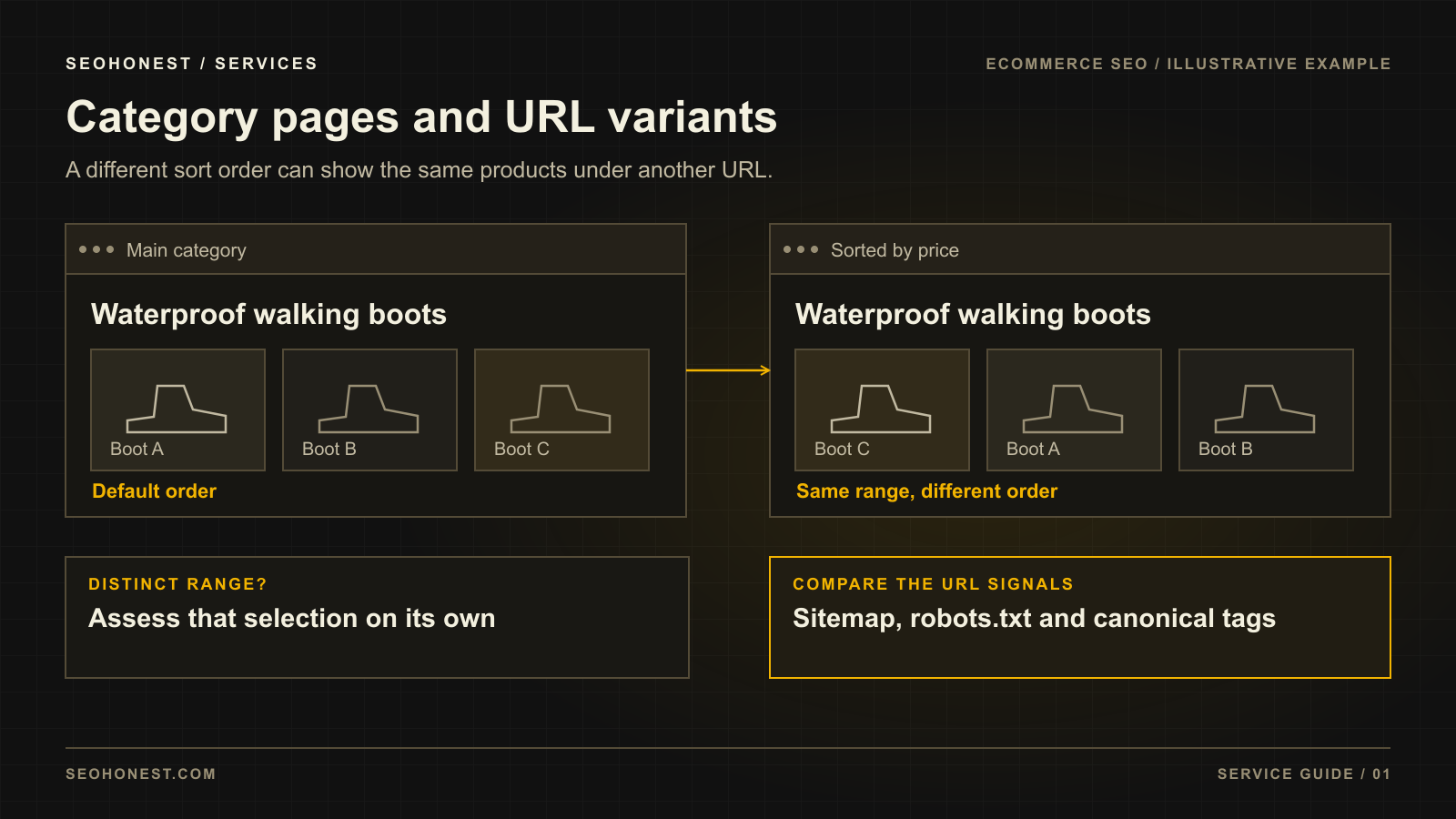
A category can serve as a search landing page when it has a clear purpose and presents a relevant range. A shop can also generate several addresses for the same list, depending on filters, sorting and other parameters. We check which variants show substantially similar content and which offer a distinct selection worth assessing on its own.
Imagine a shop with a category for waterproof walking boots. The category helps shoppers find that range. Sorting it by price gives visitors a useful way to browse the same products, and the shop may generate a different URL for the sorted list. We assess the category and the sorted URL according to the purpose each serves.
We review sitemap entries, robots.txt rules and canonical tags against the way your shop generates and links to those pages. The appropriate treatment depends on the catalogue and the platform. If you need a diagnosis and a report of priorities before committing to ongoing work, we can discuss a standalone technical SEO audit.
We agree which edits belong in the first batch. The mix depends on what we find and what your team can change on the shop.
We separate the work completed from what the available search and shop data show.
A product page visit shows that someone reached the page. An enquiry and a purchase are separate events, and each needs its own record. We include orders in the review where you can share the data and they can be matched to a source.
Our portfolio includes work on an existing OpenCart shop. For your installation, we check the current templates, settings and any modifications before agreeing what can be done. That review helps us see whether a proposed change can be handled in the current setup or needs a separate discussion. We define the scope around what your shop can support and the parts of the catalogue you want to prioritise.
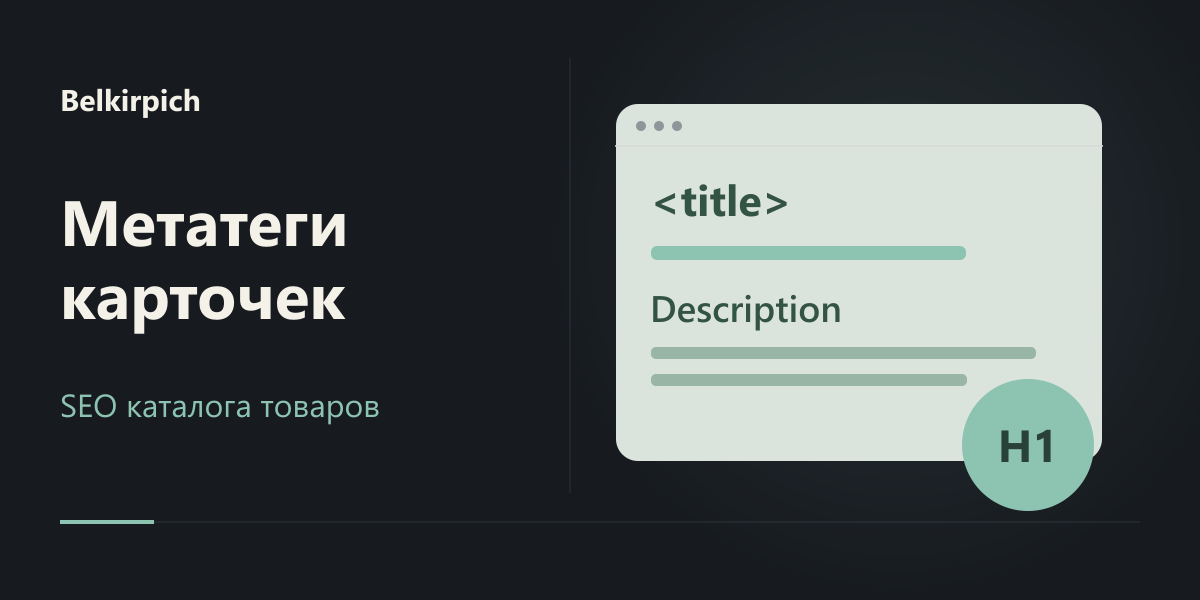
For Belkirpich in August and September 2025, we prepared new title tags and meta descriptions for 704 product pages and created eight template variants. We worked in batches and checked the prepared metadata against the information on the product pages. The working register recorded the old and new metadata and the dates of the changes. The product page metadata case study describes how we organised that work across the catalogue.
Send us your shop URL, a description of your product range, the platform you use and the categories or products you want to prioritise. If there is a known limit on what your team can change, include that too.
We use the size of the catalogue, the types of pages, the platform constraints and the work you want to take on to scope ongoing support. We can then discuss what belongs in the first batch and how to check the changes.
We agree on priorities by category or product type. A representative batch helps decide what to apply more widely.
Our portfolio includes OpenCart work. We check the existing installation before agreeing which changes are feasible.
Share your site and what you want to improve. We can suggest a starting point and explain what the work would involve.