Ecommerce SEO services
Review how shoppers find your catalogue, how search engines handle different URLs and which changes to test first.

Global · English Россия · Русский
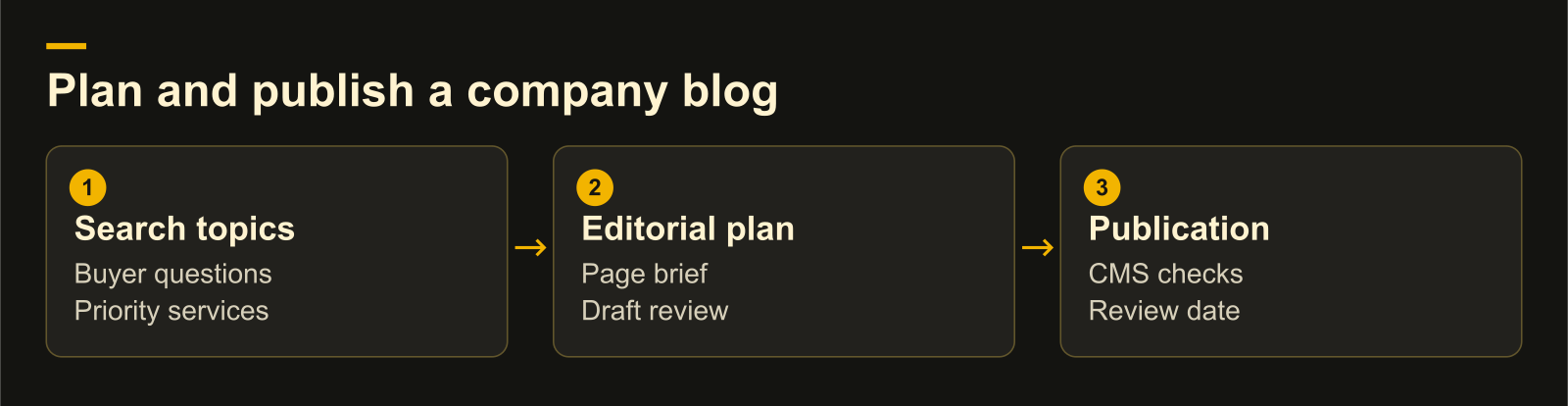
We plan topics, brief writers and edit drafts for company blogs. We prepare and publish pages when agreed and revisit articles that need updating.
Review how shoppers find your catalogue, how search engines handle different URLs and which changes to test first.
Find how people search for your products or services. We group those searches, map them to pages and prepare SEO content briefs for the pages we agree on.
Help customers find the branch that serves them. We plan location pages, prepare local information and review available search and contact data by region.
We review your website and agree which pages and settings to work on. Then we make the initial SEO changes, check them and share the results.
Find the right catalog pages for shoppers who search by manufacturer, range or model. We review the brands you choose and deliver a search map and a plan for improving their pages.
Improve the service pages that matter most and review the visits and contact activity your site can track.
Find what is preventing search engines from accessing or indexing your pages. Get a prioritized report with example URLs and tasks for your developers.
Review what customers ask and what your site already covers. Agree which articles to prepare or update first.
Set out the question each article should answer, its structure and what the writer needs to confirm.
Check drafts, headings, metadata, images and links. Agree what happens in your CMS and who supplies the copy.
Review existing articles and agree what to update based on the content, available data and business priorities.
Agree who the blog is for, what readers should find and which articles matter most.
Choose which pages to keep, update or add, then prepare the briefs for the agreed articles.
Review the drafts and prepare the agreed page elements. When publishing is in scope, check the page after it goes live.
Use the published material and available data to choose what to work on next.
A company might have several posts that answer the same question about preparing for a service visit. If one article already gives the clearest answer, we can review it first and decide what it needs. If a different group of customers needs separate instructions, a new article may make sense. In both cases, the next step should be useful to the reader. That might be another guide, a service page or a way to ask a question.
If you already have a writer, we can agree on how briefs and edits fit that process. If your project needs a keyword map and instructions for your own team, ask about keyword research and page briefs. That project ends with research and briefs for the agreed pages.
An article can bring readers to the site without generating an immediate inquiry. We look at search visits alongside what the article helps readers do. Where tracking is available, we review form submissions and phone clicks as separate events. A phone click records an action on the site. Confirming an inquiry requires a record of what happened after the click.
We use those observations to discuss the next round of work. A topic that attracts a broad audience may still be a lower priority than one that answers a question your customers regularly ask.
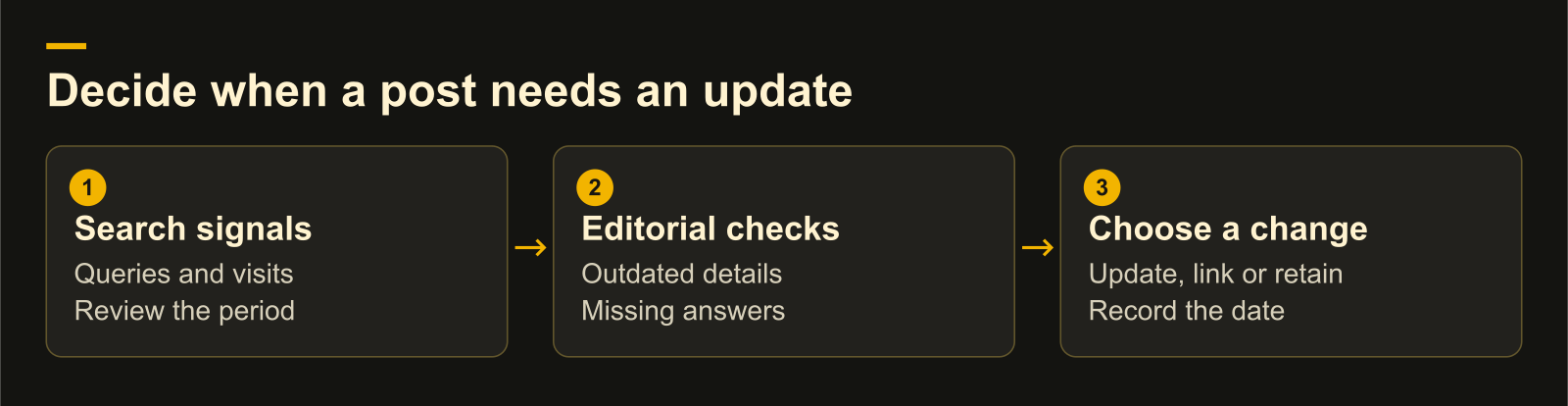
Yes. We review the published articles and structure, then decide what needs attention and which new topics would help readers.
We consider the volume and complexity of the material, the information we need to review and the agreed editing, page preparation and publishing work.
We compare the topics and pages readers find with your goals. Where data is available, we review visits, form submissions and phone clicks separately.
Share your site and what you want to improve. We can suggest a starting point and explain what the work would involve.