Blog management services
We plan topics, brief writers and edit drafts for company blogs. We prepare and publish pages when agreed and revisit articles that need updating.

Global · English Россия · Русский
Find how people search for your products or services. We group those searches, map them to pages and prepare SEO content briefs for the pages we agree on.
We plan topics, brief writers and edit drafts for company blogs. We prepare and publish pages when agreed and revisit articles that need updating.
Review how shoppers find your catalogue, how search engines handle different URLs and which changes to test first.
Help customers find the branch that serves them. We plan location pages, prepare local information and review available search and contact data by region.
We review your website and agree which pages and settings to work on. Then we make the initial SEO changes, check them and share the results.
Find the right catalog pages for shoppers who search by manufacturer, range or model. We review the brands you choose and deliver a search map and a plan for improving their pages.
Improve the service pages that matter most and review the visits and contact activity your site can track.
Find what is preventing search engines from accessing or indexing your pages. Get a prioritized report with example URLs and tasks for your developers.
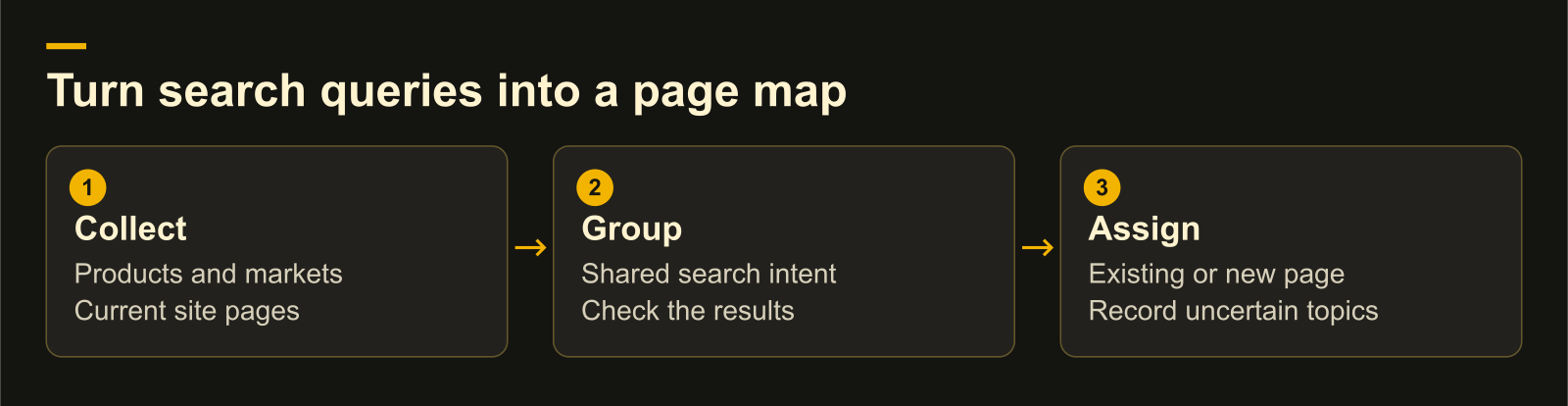
Collect searches within the agreed scope and group them by topic and what the visitor needs to do.
Match the groups to current URLs. Identify pages to keep or improve and topics that need their own page.
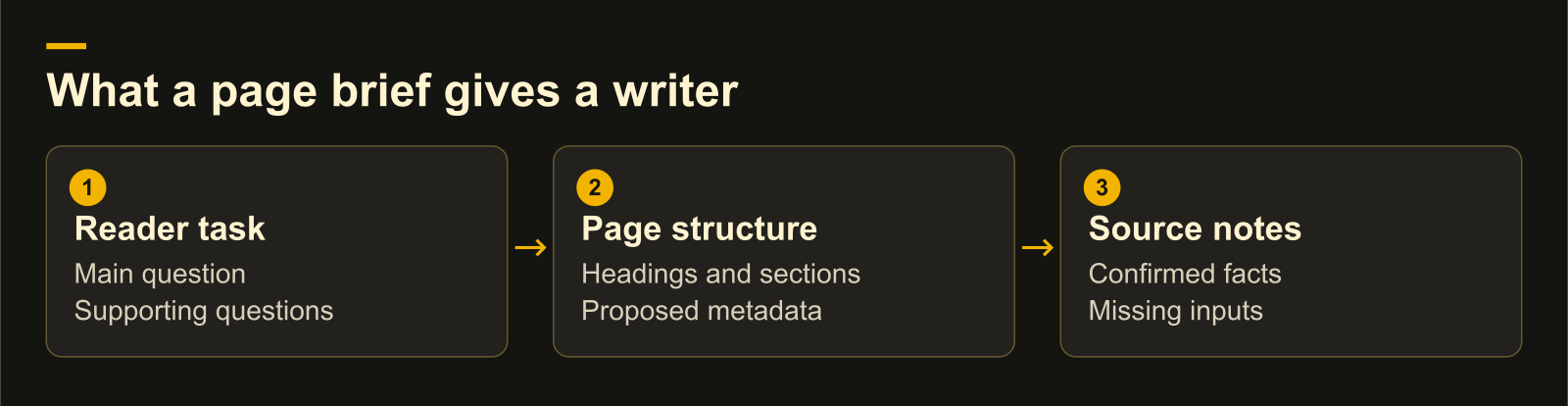
Prepare page requirements, questions to answer, proposed headings and metadata. Flag details the writer needs to confirm.
Discuss your products, services, target markets and current pages. Agree which parts of the site the research covers.
Organize queries by topic and visitor need, then discuss which pages can answer each group.
Write briefs for the agreed pages and mark questions that need an answer before the content is prepared.
Suppose a business installs garage doors and offers servicing. People searching for a new door and people trying to fix an existing door may need different information. We check how the site handles those tasks. If the service page already answers common repair questions and offers a clear way to book, we can recommend improving it. If the site only explains installation, repair may need a page of its own.
Several ways of phrasing the same request can still belong together. The map records that decision so a writer can see what the page should cover. If the site’s navigation, features or checkout also need a redesign, agree on those requirements as a separate website project.
A useful brief tells the writer what a visitor needs to know before taking the next step. For a service page, that might mean explaining what work is included, what affects the estimate and what information to provide when making an inquiry. For a product category, it might mean explaining what options are available and how shoppers can compare them.
We distinguish information the business has confirmed from questions that remain open. For example, if a specification lists a feature but says nothing about which models include it, the brief asks the team to confirm the models. That keeps an unanswered question from becoming a claim in the draft.
Yes. We review their purpose and content before deciding which pages can stay, need changes or should be added.
The brief sets out the work for a writer. Writing, editing and publishing can be agreed as separate work.
Share your site and what you want to improve. We can suggest a starting point and explain what the work would involve.