Blog management services
We plan topics, brief writers and edit drafts for company blogs. We prepare and publish pages when agreed and revisit articles that need updating.

Global · English Россия · Русский
Find the right catalog pages for shoppers who search by manufacturer, range or model. We review the brands you choose and deliver a search map and a plan for improving their pages.
We plan topics, brief writers and edit drafts for company blogs. We prepare and publish pages when agreed and revisit articles that need updating.
Review how shoppers find your catalogue, how search engines handle different URLs and which changes to test first.
Find how people search for your products or services. We group those searches, map them to pages and prepare SEO content briefs for the pages we agree on.
Help customers find the branch that serves them. We plan location pages, prepare local information and review available search and contact data by region.
We review your website and agree which pages and settings to work on. Then we make the initial SEO changes, check them and share the results.
Improve the service pages that matter most and review the visits and contact activity your site can track.
Find what is preventing search engines from accessing or indexing your pages. Get a prioritized report with example URLs and tasks for your developers.
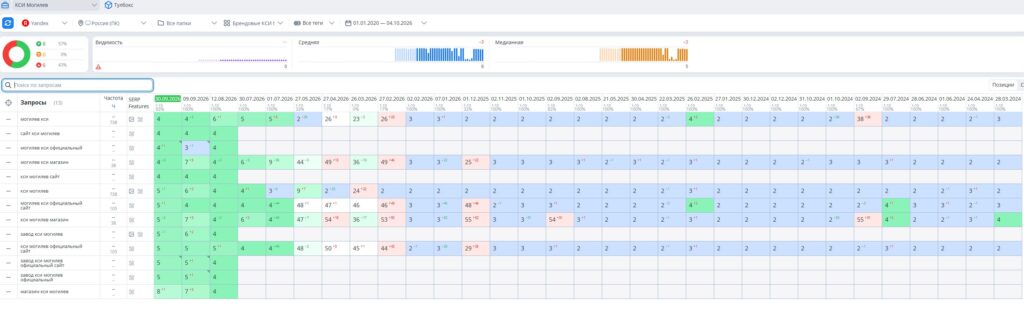
Review manufacturer names, ranges and models. Separate searches about a brand from searches for a specific item.
Check which brand pages, categories and product pages already serve those searches. Review duplicate addresses and links to products.
Identify the assortment, specifications and purchase details the selected pages need. Flag facts that still need confirmation.
Discuss external content and publisher costs separately if they are relevant to the plan.
Record which searches, market and dates to use when reviewing visibility after changes.
Confirm the manufacturers, available products and regions you sell to.
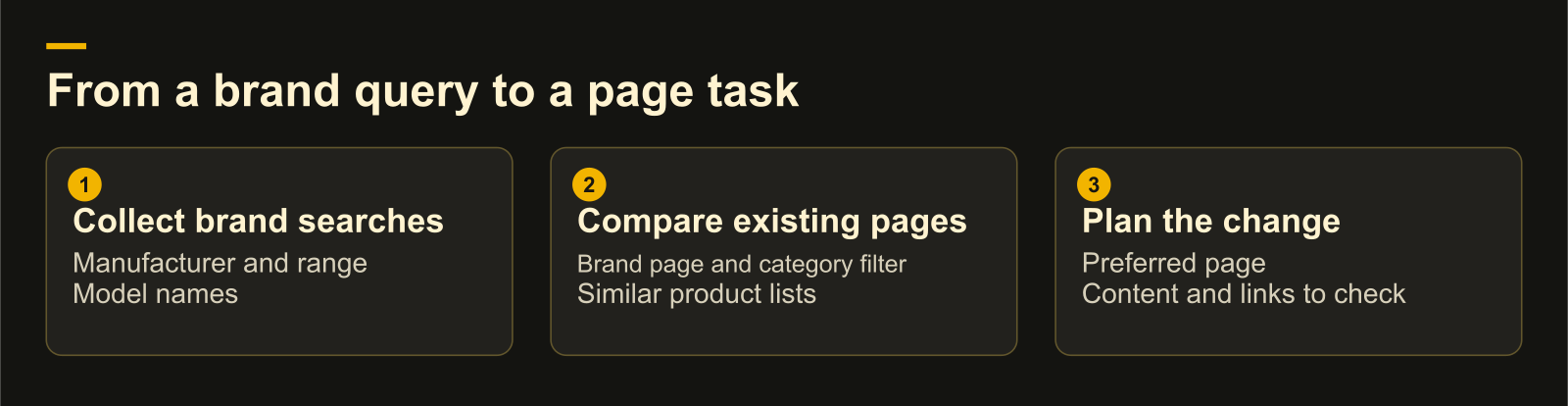
Review brand, range and model searches and check where those shoppers currently land.
Map searches to relevant pages and specify which content, links or addresses need attention.
Agree what to prioritize. Scope implementation, follow-up checks and any external placements separately.
Someone looking for a manufacturer’s products needs a way to see what you carry. A shopper who already knows the model needs details about that item and a clear way to buy or inquire. We review the searches and your catalog together before recommending a destination for either group.
A page for a product range can make sense when your assortment gives shoppers a useful choice within that range. We check what is already on the site and what information you can supply before proposing a new address.
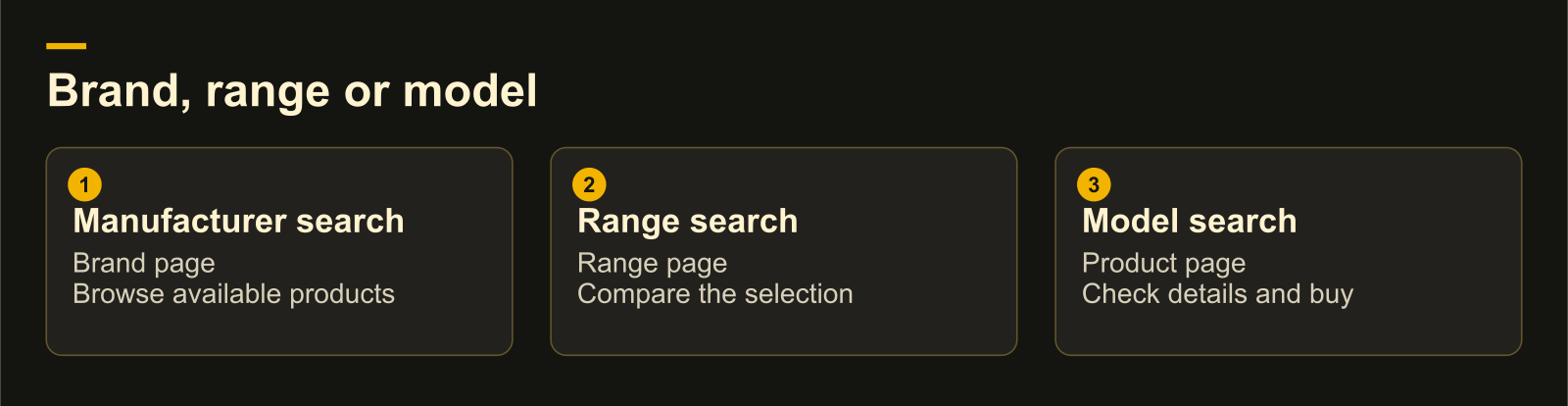
A brand page and a category filtered by the same brand may show much the same products. We compare their addresses, contents and paths from the catalog. The plan identifies which page should answer the search and where a shopper should go next. For an existing page, the work may call for a clearer heading, better product links or more detail about the range.
| Shopper’s task | Page to review | What to check |
|---|---|---|
| Browse a manufacturer’s products | Brand page | Which products you carry and how shoppers reach the relevant categories. |
| Compare products in one range | Range page or collection | Whether the selection and its differences are clear enough to be useful. |
| Find a particular model | Product page | Model name, specifications, availability and how to buy or inquire. |
For the brands in scope, you receive a map that pairs groups of searches with existing pages or proposed pages. The accompanying tasks identify what to change and which facts still need your team to check. For example, if the manufacturer describes a feature at range level, we flag whether you have enough evidence to say which models include it.
We use your catalog and available manufacturer materials to review claims about products. If a specification, certificate or delivery condition is missing, we record it as a question for your team. That gives an editor or developer a clearer brief for the next stage.
Agree on a set of searches, a market and dates before comparing results. If the page changes go ahead, you can return to the same set and see which addresses appear in search and which receive visits. Where tracking is available, form submissions and contact clicks can be reviewed separately. Confirming an inquiry or sale requires a record beyond the click.
Start with this assessment when you need a decision about specific brands or manufacturers. For a project that covers the rest of the catalog, including categories, product templates, URL variants and ongoing reporting, see our ecommerce SEO services.
Yes. We can review brand and range pages within your existing catalog and agree which manufacturers to prioritize.
A manufacturer page can sit within your existing store when that page helps shoppers browse the products you carry.
Compare the same searches over agreed dates and look at visits and contact activity separately. That comparison is most useful when the search settings and measures stay consistent.
Share your site and what you want to improve. We can suggest a starting point and explain what the work would involve.