Pre-launch website QA services
Get a review of the version your team plans to launch. We check the agreed pages, content and visitor actions on staging and record issues your developer can work through.

Global · English Россия · Русский
Move the agreed content, map changed URLs and check pages and redirects after launch.
Get a review of the version your team plans to launch. We check the agreed pages, content and visitor actions on staging and record issues your developer can work through.
Agree what your website needs before development starts. We plan the sections and pages and document what visitors should find and be able to do.
We build WordPress service websites and product catalogs. Agree on the pages, features and editing setup, then review the site before launch.
Record the categories, products, articles and pages that need to move.
Map changed addresses and agree where old links should lead.
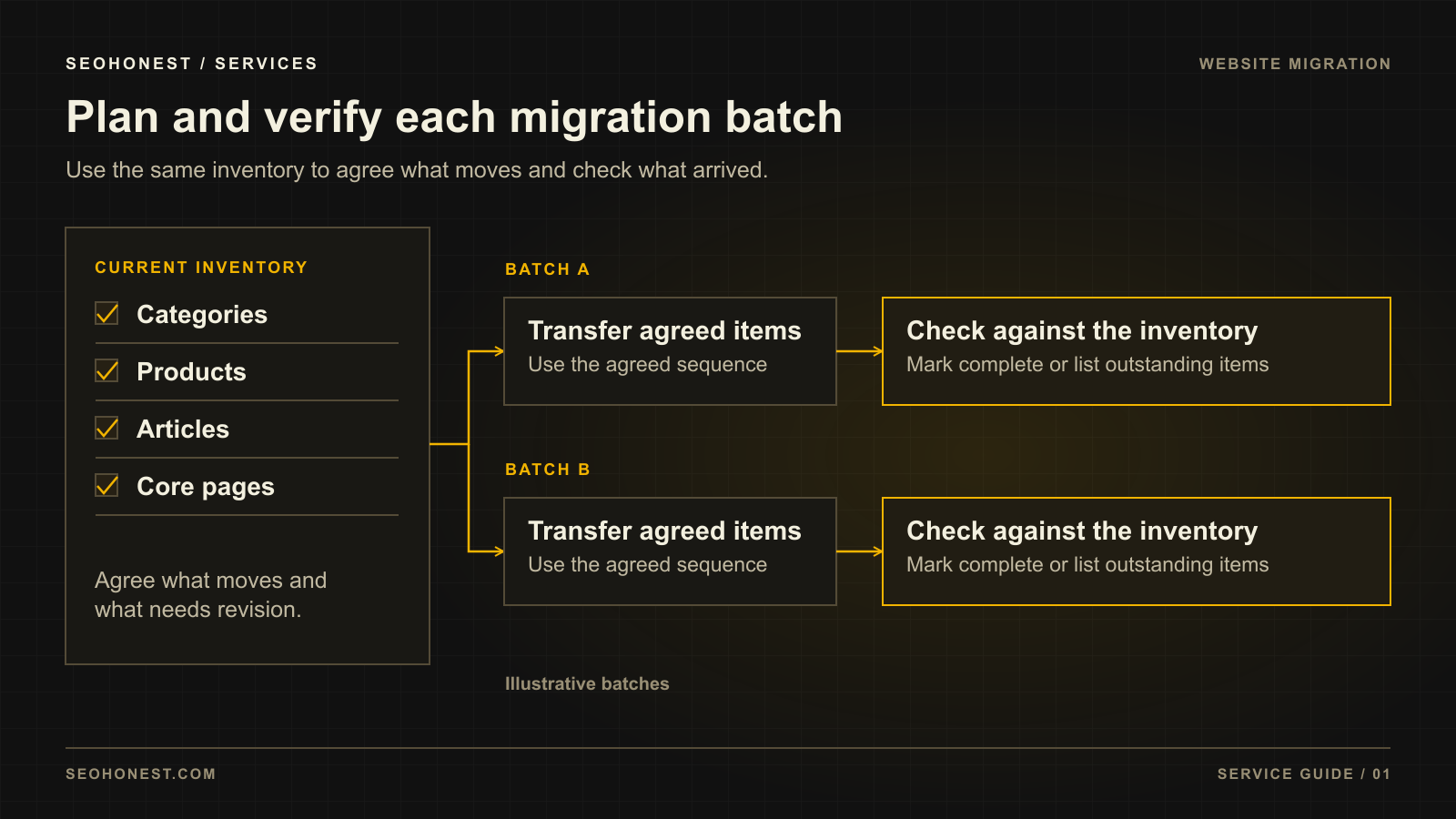
Move the agreed materials in one batch or in stages.
Review the agreed pages, redirects and settings around the switch.
Make an inventory and agree what can move as it is.
Map changed addresses and record how each should respond.
Move content in the agreed order and check it against the inventory.
Verify selected pages, redirects and settings covered by the scope.
Report what moved, how addresses changed and which items still need attention.
If you’re changing your website’s structure or moving to a new platform, we help you carry over the content you want to keep and decide where visitors should land when they follow an old link. Seohonest moves the agreed pages and product content, maps changed URLs, and checks pages and redirects after launch. Your team receives a record of what moved, where old addresses lead, and what we found in the launch checks.
We agree on the materials to move before work starts. The list can include the following:
Separating straight transfers from revisions helps you see which materials are ready to move and which need additional work first. Confirm any transfer of orders, customer accounts, payment data, or integrations separately.
The URL map records which old addresses are changing, where each one should lead, and which pages are being retired. The destination should make sense to someone who followed the old link. We use the map to set up the agreed redirects and to check that they lead to the intended pages.
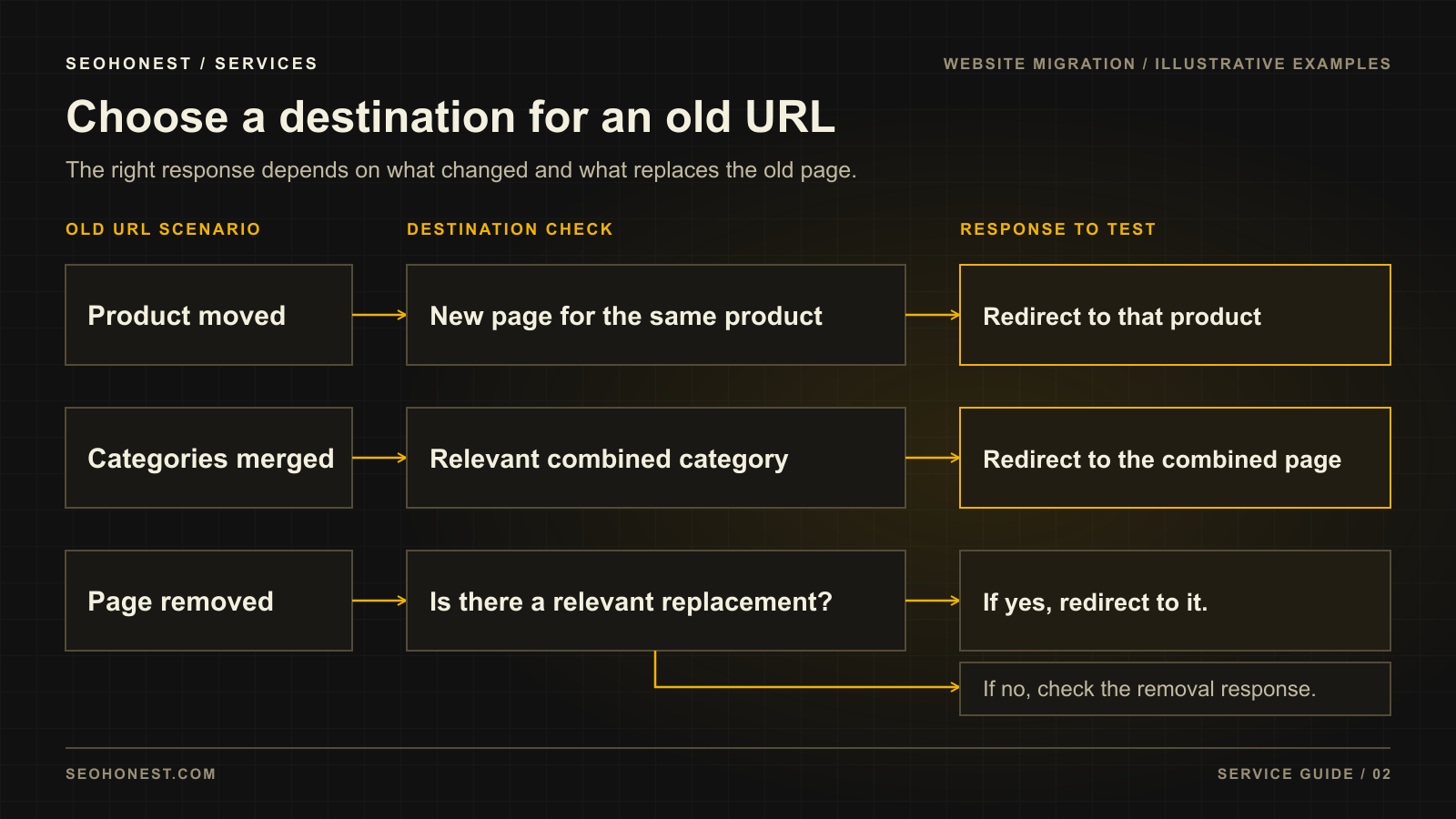
The three examples below are hypothetical. The destination and expected response are agreed for each address as part of the project.
| What changed | Decision in the URL map | What to check |
|---|---|---|
| A product moved to a new address | Redirect the old product URL to the new page for the same item. | Follow the old URL and confirm that it reaches the intended product. |
| Two categories merged | Map the old category URLs to the combined category if it still covers what visitors came to find. | Follow both old URLs and check that the merged page offers the relevant products. |
| A page was removed | Redirect only if a relevant replacement exists. Otherwise, leave the old address without a redirect. | Check that the address either reaches the agreed replacement or returns the expected response for a removed page. |
After launch, we verify responses and redirects for the agreed pages. We check that internal links use the intended addresses and that page titles, descriptions, and canonical tags reflect the new structure. The checks can also cover the rules in robots.txt and the URLs in the sitemap. On a catalog site, we can follow an agreed path from a category to a product page and through to the inquiry step.
If your team has already prepared the new site and needs a separate review before switching, you can request a pre-launch website audit.
Your team can use the handover to review the move and pick up any remaining work. It includes:
For a phased move, the handover also identifies completed batches and materials still scheduled for transfer. If you need ongoing SEO after the move, we agree on that work separately.
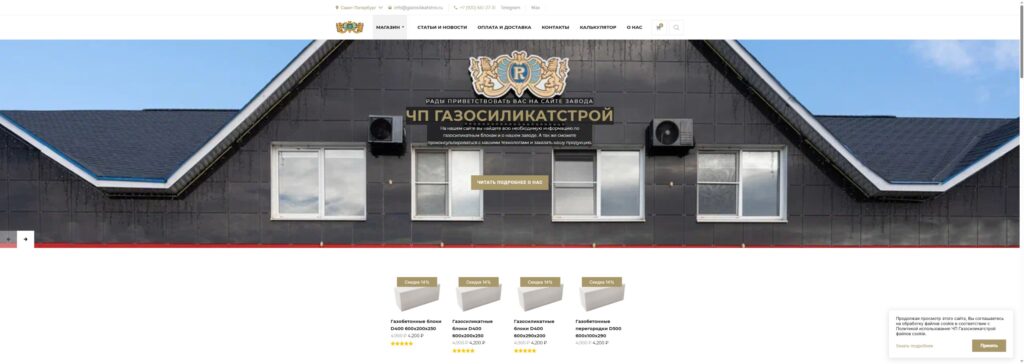
Our product and content migration case study covers a move for a construction materials supplier. We transferred the agreed catalog, articles, and main pages to a test version of the site. We compared the transferred materials with the existing site to check that the new version contained the agreed items. We also reviewed the page addresses and prepared a redirect map so the team could see how the old and new URLs matched up.
To request a quote, share the current site’s URL and the proposed structure or a prepared version of the new site. Tell us which parts of the catalog and other content you want to move. If you’ve already decided which sections will merge or which pages need rewriting, include those details so we can distinguish transfer work from content changes.
The quote depends on the amount and types of content, the changes the new structure requires, and how the launch will be organized. A move in batches may need a different sequence of transfers and checks from a single switch. We use those details to agree on the work before the move starts.
Migration focuses on moving agreed materials and checking addresses. A new build may also need a different structure, design or functions.
Yes, if a phased move suits the project. We agree on the batches, order and checks before work starts.
We scope ongoing SEO separately after the move.
We consider the content volume, changes to the structure and how the switch will be organized.
Share your site and what you want to improve. We can suggest a starting point and explain what the work would involve.